Building
Building a house in Mallorca in 2026: the process, step by step
Building a house in Mallorca follows a set order, from buildable land to the first occupancy licence and the deed. We explain each step with its legal timeframe and what you pay, including what changes if the plot is rural or you live away from the island.
At a glance
- There are eight steps, from the planning certificate (certificado urbanístico) for your land to registering your house with the Cadastre (Catastro).
- By law, the council has 3 months to decide on the building permit (licencia de obra); in Palma it took 9 to 12 months in practice (2026).
- There is no official price per m². The permit costs between 4.9% (Andratx) and 5.68% (Calvià) of the construction cost (presupuesto de ejecución material, PEM), and the building work carries 10% VAT.
- On rural land (suelo rústico), you need a plot of at least 14,000 m² and a prior report from the Consell de Mallorca (Island Council), and only one home is allowed per plot.
Imagine you buy a plot in Calvià in January and want to be living in the house by the following summer. Before any excavation can start, you need a design and a permit, and by law the permit alone can take three months. When you are building a house in Mallorca, the schedule starts with the paperwork.
This guide sets out, in order, the steps for building a home in Mallorca and answers two questions: how long it takes to build a house in Mallorca, and how much it costs. In 2025, 656 single-family homes on the island received professional association approval (visado), 87 of them in Calvià, according to statistics from COAAT Mallorca, the island’s association of building engineers. It is written by Top Mallorca Constructions, builders in Mallorca whose projects include the villa in Es Capdellà and others in Santa Catalina (Palma), Cala Llamp and Port d'Andratx.
What are the steps to building a house in Mallorca?
- Check that the land can be built on.
- Commission the basic design (proyecto básico) and the geotechnical survey from your architect.
- Apply for the permit (on rural land, with a report from the Consell).
- Submit the construction design (proyecto de ejecución) and choose a builder.
- Take out the 10-year structural insurance (seguro decenal) and give notice that work is starting.
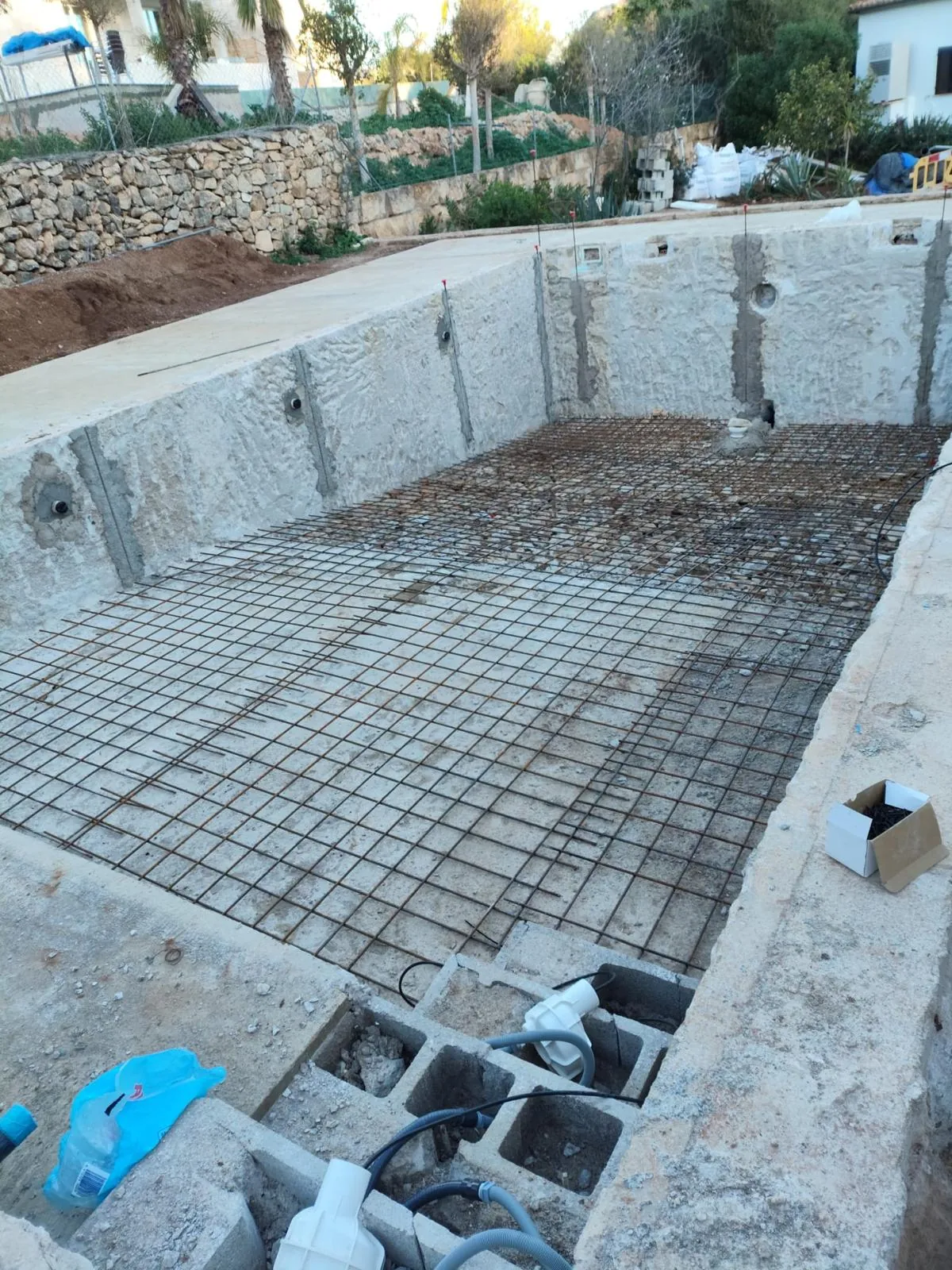
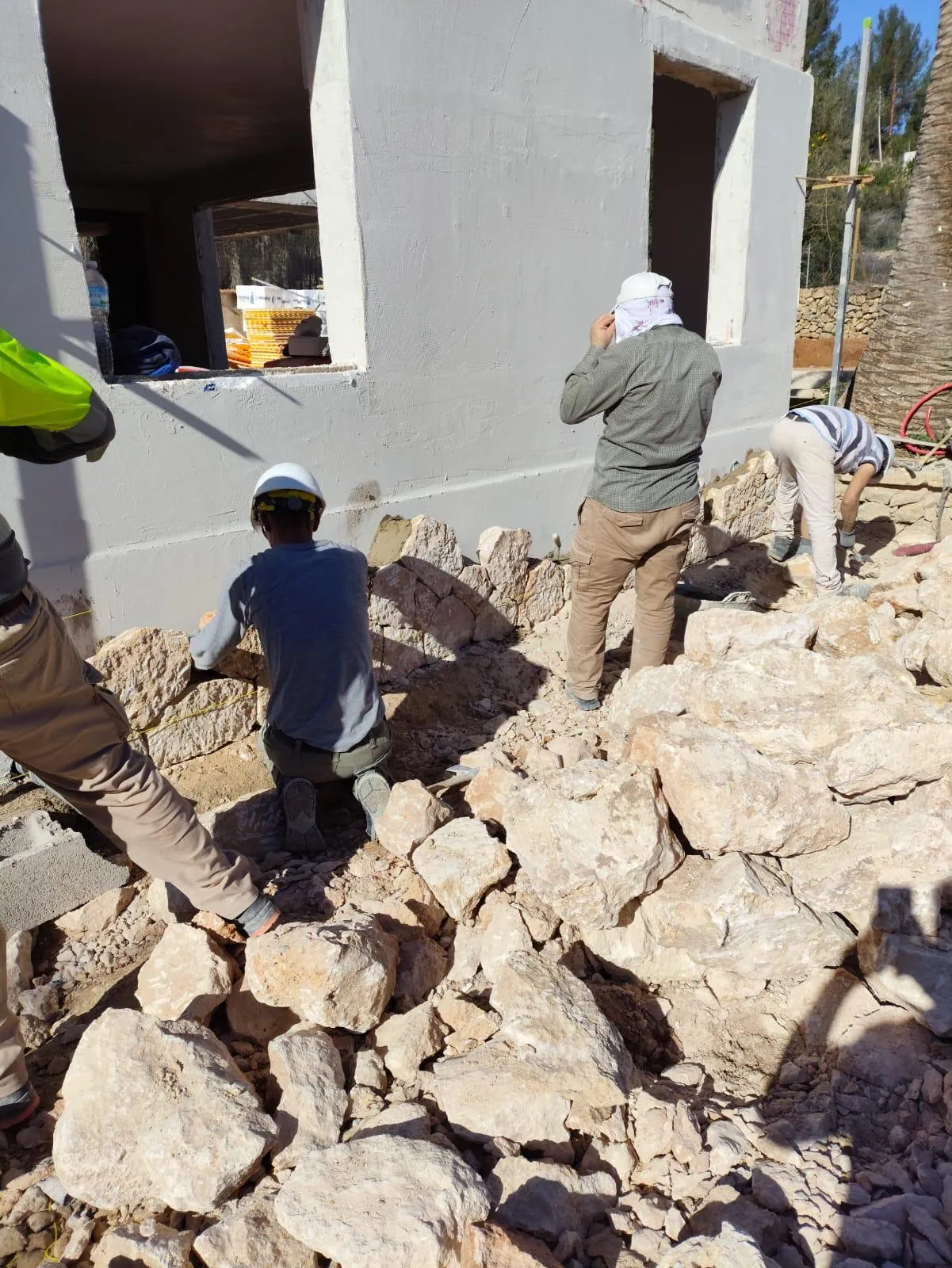
- Build in phases, from the foundations to the pool.
- Close out the build with the final completion certificate (certificado final de obra) and the first occupancy licence (licencia de ocupación).
- Sign the declaration of new build deed (escritura de obra nueva) and register the house with the Cadastre.
These steps for building a home are set out in Spain’s Building Act (Ley 38/1999 de Ordenación de la Edificación, LOE) and the Balearic Planning Act (Ley 12/2017 de urbanismo de las Illes Balears, LUIB).
The land and the planning certificate
The planning certificate (certificado de aprovechamiento urbanístico), which the town council issues within one month at most, tells you whether the land can be built on; it is valid for six months (LUIB, art. 64.2). On urban land, there will be no permit unless your plot is a building plot (solar), meaning that it borders a public space and has the basic services (art. 25). The other checks are covered in our guide to buying land to build on in Mallorca.
The architect’s design and the geotechnical survey
For a home, the design must be signed by an architect (LOE, art. 10). You apply for the permit with the basic design; the house is built from the construction design, which develops it without downgrading its specifications. If the permit was granted on the basic design, the construction design must be submitted within nine months (LUIB, art. 152).
The geotechnical survey is carried out at the initial design stage, before the structure is sized, because it can change the foundations (Technical Building Code (CTE), DB SE-C, section 3.1). At Top Mallorca we build from your architect’s design, or we can recommend professionals.
The building permit for a new build
Obtaining it is the responsibility of the client (promotor), which means you (LOE, art. 9). Once the application is complete, the town council has three months to decide (LUIB, art. 151.4) and, for a new build, no reply counts as a refusal (Spain’s Land Act, Ley de Suelo, art. 11.4).
And in practice? In February 2026, Palma put its average at 9 to 12 months, and at 1 to 3 months through a private planning certification body (entidad privada de certificación urbanística, ECU), a route that Calvià and Andratx also accept. Once the permit is granted, the town council must be notified ten days before work starts (LUIB, art. 151.5). We explain which documents the permit requires and how to shorten the wait in our guide to building permits in Mallorca.
Who does what, and the 10-year structural insurance
The LOE allocates the roles: you, as the client, make the decisions and fund the project; the architect designs the house and directs the works; the building engineer (aparejador) directs their execution; and the builder carries out the work, with a site manager (jefe de obra) in charge (arts. 9 to 13).
For homes, the 10-year structural insurance is compulsory and is taken out by the client, unless you are building just one single-family home for your own use. It covers structural damage for ten years, and the premium must be paid by the time the works are formally accepted (art. 19 and second additional provision). The liability periods run from acceptance without reservations, or from when any reservations are put right: ten years for the structure, three for habitability and one for finishes (art. 17). We explain what to ask a builder before signing in how to choose a builder in Mallorca.
The build, phase by phase
Before work starts, the builder submits its health and safety plan and the setting-out record (acta de replanteo) is signed. The build then follows its sequence, from the foundations to the outdoor areas. Your part is making the decisions, and late decisions delay the build. On the new-build homes and villas in Mallorca that we take on at Top Mallorca, every change is priced and approved by you in writing before it is carried out.
If your plot is in Calvià or Andratx, it is best not to schedule the excavation for July or August. In those months, Calvià restricts noisy works to between 10:30 am and 1 pm in its tourist areas and in the villages of Calvià and Es Capdellà, under its noise by-law (BOIB, the Official Gazette of the Balearic Islands, 8 June 2024), and Andratx prohibits excavation and the use of pneumatic drills (BOIB, 6 July 2024).
From the completion certificate to the deed and the Cadastre
The site management team (dirección facultativa) signs the final completion certificate, approved by their professional associations (LOE, arts. 12 and 13; Real Decreto 1000/2010, art. 2). With it, you and the builder sign the acceptance certificate (acta de recepción) within 30 days, unless otherwise agreed; if anything is outstanding, reservations are recorded together with a deadline for putting them right (art. 6).
Next, you apply for the first occupancy licence (licencia de ocupación o primera utilización), which in the Balearic Islands has replaced the first-occupancy habitability certificate (cédula de habitabilidad) since May 2024 (Ley 7/2024, art. 53); the town council has one month to decide on it (LUIB, art. 158). Without it, you cannot have permanent utility supplies or sign the declaration of new build deed for the completed house (Land Act, art. 28). All that remains is to declare your house to the Cadastre within two months of the end of the works (Real Decreto 417/2006, art. 28).
How long does it take to build a house in Mallorca?
There are no official statistics on the total time it takes to build a house in Mallorca: it depends above all on the permit and the size of the build. What is fixed is the legal timeframe for each procedure.
| Stage | Legal or indicative timeframe | Law or source |
|---|---|---|
| Planning certificate | 1 month; valid for 6 months | LUIB, art. 64.2 |
| Building permit | 3 months; no answer means refusal. In Palma, 9 to 12 months in practice | LUIB, art. 151.4; Ajuntament de Palma (2026) |
| Construction design | Up to 9 months after the permit; reviewed within 1 month | LUIB, art. 152 |
| Build | Start within 6 months and finish within 3 years, extendable, unless the general plan sets other timeframes | LUIB, art. 154 |
| First occupancy licence | 1 month | LUIB, art. 158 |
| Cadastre registration | 2 months from the end of the works | Real Decreto 417/2006, art. 28 |
How much does it cost to build a house in Mallorca in 2026?
There is no official price per square metre: the cost of building a house in Mallorca is set by the design, line item by line item. The most recent published benchmark is national and based on apartment developments: a construction cost of €1,451/m² in the second quarter of 2026, according to Grupo ST. In the Balearic Islands, because of their island location, costs are between 30% and 35% higher than in 2019, according to the Asociación de Constructores de Baleares, the Balearic builders’ association.
For a detached house, the price is driven mainly by:
- The land: slopes and rock make excavation and walls more expensive.
- The shape: basements and cantilevers call for more structure.
- The specification: large-format windows and doors, natural stone.
- The outdoor areas: the pool and garden are line items in their own right.
Taxes, on the other hand, are charged at known rates. The ICIO construction tax and the permit fee are calculated on the construction cost (PEM), and in 2026 they come to around 5.3% in Palma (4% plus 2.61%, with half the fee deducted from the ICIO), 5.68% in Calvià (4% plus 1.68%) and 4.9% in Andratx (3.60% plus 1.30%). They are set by the tax by-laws (ordenanzas fiscales) of Palma and Calvià and, in Andratx, by the by-laws for the ICIO and the permit fee.
Building work on a home that you contract as the client carries 10% VAT (VAT Act, Ley del IVA, art. 91), and professional fees 21%. Finally, in the Balearic Islands the declaration of new build deed attracts 1.5% stamp duty (actos jurídicos documentados; Decreto Legislativo 1/2014, art. 15).
What changes if you build a house on rural land in Mallorca?
On rural land, a new house is a conditional use (uso condicionado) under art. 19 of the Balearic Rural Land Act (Ley 6/1997 de suelo rústico). It is prohibited in protected areas such as natural areas of special interest (ANEI) and in flood-risk zones. Elsewhere it requires a plot of at least 14,000 m², or 50,000 m² in rural areas of landscape interest and on forest land, with a single home per plot (Island Territorial Plan, Plan Territorial Insular de Mallorca, rules 19 and 20).
While the permit is being processed, the town council sends the file to the Consell de Mallorca, which, after a 15-day public consultation announced in the BOIB, has three months to issue its prior and binding report on the minimum plot size and the development rights (Ley 6/1997, art. 36). Contemporary architecture is possible if the island planning commission authorises it on justified grounds (art. 27.2.b). The date the plot was subdivided, the buildable area and the pool are all covered in our guide on what to check on a rural plot before you buy it.
How can you oversee your house build if you live outside Mallorca?
With someone to represent you on the island and information you can check from a distance. Many owners are in this position: in the second quarter of 2026, foreign buyers accounted for 32.27% of home purchases in the Balearic Islands, the highest share in Spain, according to statistics from the Spanish Land Registrars’ Association (Colegio de Registradores).
This role has a name: Project Management, which means managing the build on the owner’s behalf. It does not replace the architect or the building engineer required by the LOE, but it coordinates everyone and monitors cost and timing for you. It is worth agreeing the following in writing:
- how often you will receive progress updates, with photographs;
- a line-by-line budget, so you can compare what has been spent with what was planned;
- that no change goes ahead without a price and your approval.
This is the remote oversight we provide at Top Mallorca, explained in Project Management in Mallorca. And if you are not a citizen of the European Union, you will need military authorisation to buy and to build outside urban areas (Ley 8/1975, art. 18).
Where should you start if you are going to build a house in Mallorca?
With the land and the numbers, before the plans. Ask for the plot’s planning certificate and, if the plot is rural, check its size and when it was subdivided. Then, with an architect who knows the municipality, add up what the permit and the taxes will cost. You will soon know whether the house you have in mind fits the land and your timetable.
To talk through your own case, tell us about your project.
Frequently asked questions
What is the difference between the basic design and the construction design when building in Mallorca?
The basic design (proyecto básico) defines the house and its specifications: enough to apply for the permit, but not to start work. The construction design (proyecto de ejecución) specifies every material, system and detail without falling short of the basic design, and is the version approved by the professional association (visado) and used on site. In the Balearic Islands, a permit granted on the basic design requires the construction design within nine months, and the town council has one month to review it (Ley 12/2017 de urbanismo, art. 152).
What VAT do you pay when building a house in Mallorca?
VAT is charged at 10% on the building work, provided you contract it directly with the builder as the client (promotor) and at least half of the built floor area is residential. The reduced rate also covers garages and annexes, and kitchen and bathroom units installed under a direct contract with the client (Ley 37/1992 del IVA, art. 91). The fees of the architect and the building engineer (aparejador) carry the standard rate of 21% (art. 90).
Is a geotechnical survey compulsory when building a house in Mallorca?
Yes. The Technical Building Code (Código Técnico de la Edificación) requires it at the initial design stage and, in any case, before the structure has been fully sized, because its findings can change the structural approach and the type and depth of the foundations (Documento Básico SE-C, section 3.1). It is signed by the project designer or another qualified professional and, as a general rule, investigates the ground at no fewer than three points (section 3.2).
What do you need to sign the declaration of new build deed for a house in Mallorca?
The notary requires the final completion certificate (certificado final de obra), confirming the works match the design, and the first occupancy licence (licencia de ocupación o primera utilización), under Spain’s Land Act (Ley de Suelo, art. 28). You also need 10-year structural insurance (seguro decenal), unless you are a self-builder (autopromotor) of just one single-family home for your own use (Ley de Ordenación de la Edificación, art. 20 and second additional provision). In the Balearic Islands, the deed attracts 1.5% stamp duty (actos jurídicos documentados; Decreto Legislativo 1/2014, art. 15).
When do you have to declare a new house to the Cadastre (Catastro) in Mallorca?
Within two months of the end of the works: Real Decreto 417/2006 (art. 28) counts that period from the day after completion, and the obligation lies with the owner (texto refundido de la Ley del Catastro, art. 13). The declaration can also be submitted at the town council. It updates the property’s cadastral value, which is the basis for the IBI property tax you will pay every year (Ley de Haciendas Locales, art. 65).
How do you arrange electricity and water supplies while building a house in Mallorca?
With temporary supply contracts, which the utility companies sign once you show the building permit and which last no longer than the time the permit allows for completing the works. If the permit is extended, so are the contracts. And if, before they expire, you provide proof that you have applied for the first occupancy licence (licencia de ocupación o primera utilización), they can be extended for a further nine months. Permanent contracts require that licence (Ley 12/2017 de urbanismo de las Illes Balears, art. 158).
Sources consulted (26)
- Ley 38/1999, de Ordenación de la Edificación (BOE, consolidated text)
- Ley 12/2017, de urbanismo de las Illes Balears (BOE, consolidated text)
- Real Decreto Legislativo 7/2015, texto refundido de la Ley de Suelo y Rehabilitación Urbana, arts. 11.4 and 28 (BOE)
- Código Técnico de la Edificación, Documento Básico SE-C Cimientos, section 3.1
- Real Decreto 1000/2010, sobre visado colegial obligatorio, art. 2 (BOE)
- Real Decreto 1627/1997, seguridad y salud en las obras de construcción (BOE)
- Ley 7/2024, de 11 de diciembre, de medidas urgentes de simplificación y racionalización administrativas, art. 53 (BOE)
- Real Decreto Legislativo 1/2004, texto refundido de la Ley del Catastro Inmobiliario, art. 13 (BOE)
- Real Decreto 417/2006, de desarrollo de la Ley del Catastro Inmobiliario, art. 28 (BOE)
- Ley 6/1997, de suelo rústico de las Illes Balears (BOE, consolidated text)
- Plan Territorial Insular de Mallorca, 2023 consolidated text (Consell de Mallorca)
- Ordenanzas fiscales 2026, Ajuntament de Palma (ICIO and planning services fee)
- Ordenanzas fiscales 2026, Ajuntament de Calvià (ICIO and planning permit fee)
- Andratx ICIO by-law (BOIB 72, 30 May 2019)
- Andratx planning permit fee by-law (BOIB, 2019)
- Real Decreto Legislativo 2/2004, Ley Reguladora de las Haciendas Locales, art. 65 (BOE)
- Ley 37/1992, del Impuesto sobre el Valor Añadido, arts. 90 and 91 (BOE)
- Decreto Legislativo 1/2014, tributos cedidos de las Illes Balears, art. 15 (BOE)
- COAAT Mallorca, Estadística de Edificación de Obra Nueva 2003-2025
- Colegio de Registradores, Estadística Registral Inmobiliaria, second quarter of 2026
- Ley 8/1975, de zonas e instalaciones de interés para la Defensa Nacional, art. 18 (BOE)
- Ajuntament de Calvià, amendment to art. 23.8 of the noise and vibration by-law (BOIB 77, 8 June 2024)
- Ajuntament d'Andratx, by-law on protection against noise and vibration pollution (BOIB 89, 6 July 2024)
- Ajuntament de Palma: average permit times and first permit via an ECU (Fibwi Diario, 17 February 2026)
- Grupo ST, new-build construction costs in the second quarter of 2026 (The Objective, 30 June 2026)
- Asociación de Constructores de Baleares, costs compared with 2019 (Menorca.info, 30 May 2026)
Builders of high-end homes in Mallorca: new builds, refurbishments, restoration, Project Management and maintenance. About us.